Online Trauma & PTSD therapySometimes the danger has passed, but your nervous system hasn’t realised it yet
Online therapy with Lisa Marini for adults across the UK. Understand how traumatic experiences affect the present, with trauma-focused CBT where appropriate.
Sessions in English & Italian
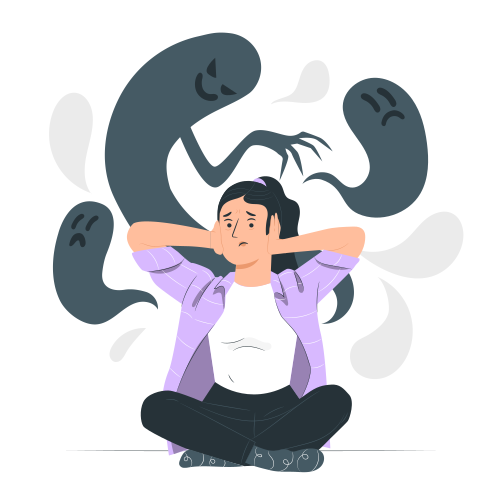
Many people think trauma is something that stays in the past. For others, it feels as though part of the past continues living in the present. You may logically know that you’re safe, yet your body reacts as though danger could return at any moment. A particular smell. A sound. A place.
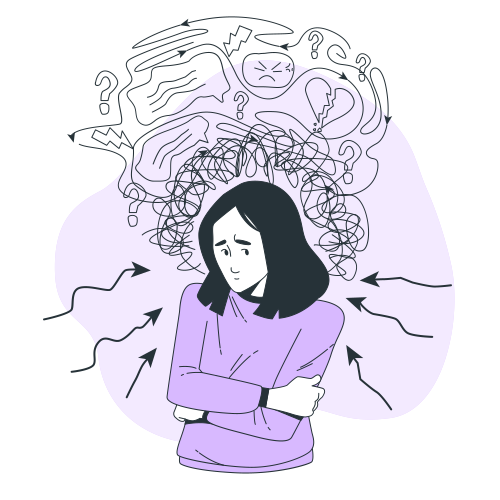
A conversation. Or sometimes nothing obvious at all. Your heart races. Your muscles tense. You feel on edge without understanding why. For some people, trauma is experienced through memories and flashbacks. For others, it appears as persistent anxiety, emotional numbness, difficulty trusting people, feeling disconnected from themselves or constantly expecting something bad to happen.
Trauma affects people in many different ways, but one thing many survivors have in common is this:
I don’t feel like the person I used to be.
Understanding it
Trauma isn’t defined only by what happened
Two people can experience the same event and respond very differently. Likewise, someone can experience events that others might not immediately recognise as traumatic, yet still develop lasting psychological difficulties. Trauma is not simply about the event itself. It’s about how the nervous system responds when an experience feels overwhelming and difficult to process.
Some people associate trauma with a single event. Others have lived through repeated experiences such as emotional abuse, bullying, neglect, domestic violence or prolonged exposure to fear and unpredictability. There is no hierarchy of suffering. What matters is how those experiences continue to affect your life today.
Mind & body
Trauma can affect both mind and body
Trauma isn’t experienced only through thoughts and memories. Many people notice that their body seems unable to fully switch out of survival mode. You may find yourself constantly alert, easily startled or unable to relax, even when everything around you appears safe. Others experience persistent muscle tension, headaches, gastrointestinal difficulties, overwhelming fatigue or chronic pain that seems difficult to fully explain.
Research increasingly suggests that prolonged activation of the body’s stress response can influence the nervous system in ways that affect both emotional and physical wellbeing. This does not mean that physical symptoms are "all in your head." Nor does it mean that every experience of chronic pain or fatigue is caused by trauma.
However, for some people, understanding how past experiences may have shaped the way the nervous system responds can become an important part of making sense of symptoms that have felt confusing for years. Therapy doesn’t replace appropriate medical assessment or treatment. Instead, it helps us understand how psychological and physical experiences can interact, particularly when the nervous system has remained in a prolonged state of threat.
What keeps it going
The cycle that keeps trauma alive
One of the most painful aspects of trauma is that many of the ways people try to protect themselves make perfect sense. You avoid reminders. You stay busy so you don’t have to think. You emotionally switch off. You remain constantly alert for signs that something bad might happen again. These strategies often develop for understandable reasons.
At one point, they may even have helped you survive. The difficulty is that when they continue long after the danger has passed, they can prevent the nervous system from learning that life has changed. Recovery isn’t about forgetting what happened. It’s about helping your mind and body discover that the present no longer has to be lived as though it were the past.
What I help with
The difficulties I commonly support people with
Trauma affects every person differently.
I commonly support people experiencing:
- Post-Traumatic Stress Disorder (PTSD)
- Complex trauma
- Childhood trauma
- Emotional abuse
- Trauma following accidents or medical events
- Domestic abuse
- Hypervigilance
- Flashbacks
- Nightmares
- Emotional numbness
- Persistent shame
- Difficulties trusting others
- Trauma-related anxiety
- Trauma associated with persistent physical symptoms
My approach
I use evidence-based Cognitive Behavioural Therapy (CBT), including trauma-focused CBT where appropriate. Therapy is collaborative, compassionate and adapted to your individual experiences. Recovery doesn’t happen by forcing yourself to revisit painful memories before you’re ready. Instead, we work together to understand how trauma has affected your nervous system and gradually develop the skills needed to process difficult experiences safely and effectively.
The goal isn’t to become the person you were before the trauma.
It’s to build a life in which the trauma no longer defines who you are.
How therapy helps
How therapy can help
One of the biggest misconceptions about trauma therapy is that it simply involves talking repeatedly about what happened. Effective trauma therapy is much more than retelling difficult memories. Together we first develop an understanding of how trauma continues to influence your thoughts, emotions, relationships, behaviours and physical wellbeing today. Only when there is sufficient safety and stability do we begin processing traumatic memories in a structured and evidence-based way.
The aim isn’t to erase the past. It’s to help the past stop intruding on the present. Many people describe recovery not as forgetting, but as finally feeling able to remember without feeling as though they are reliving the experience.
Online sessions
Online trauma therapy across the UK
Although I am based in Manchester, I provide online therapy for adults throughout the UK. Online sessions offer a flexible and effective way of accessing evidence-based trauma therapy from the comfort of your own environment, allowing us to work together at a pace that feels safe and manageable.
Before we begin
Your questions,
answered.
You don’t need to have everything figured out before getting in touch.
Do I need to have PTSD to benefit from trauma therapy?
No. Many people experience the lasting effects of traumatic experiences without meeting the full diagnostic criteria for PTSD. Therapy focuses on how your experiences are affecting you today rather than on whether you fit a particular diagnosis.
Will therapy make me relive everything that happened?
This is one of the most common concerns people have. Trauma therapy is not about forcing you to talk about painful experiences before you’re ready. We first develop safety, understanding and coping strategies before considering trauma processing, ensuring that therapy progresses at a pace that feels manageable.
Can trauma really affect physical health?
For some people, yes. Trauma can influence the way the nervous system responds to stress, and this may contribute to ongoing symptoms such as muscle tension, fatigue or persistent pain alongside emotional difficulties. Physical symptoms should always be appropriately assessed by a medical professional, but understanding the interaction between mind and body can be an important part of recovery for some individuals.
How many therapy sessions will I need?
That is entirely up to you. Therapy isn’t something you commit to for a fixed period, and you are always in control of how long you choose to continue. Some people come to therapy to work through one specific difficulty or life event, while others prefer to take more time to explore longer-standing patterns and make gradual changes.
During our first sessions, we’ll discuss your goals and regularly review how therapy is progressing, so you can decide what feels most helpful for you.
Take the first step
A little space
for something to change.
Many people spend years believing they should have "moved on" by now. Trauma rarely works that way. Recovery isn’t measured by how well you forget the past. It’s measured by how freely you’re able to live in the present.
Book a free consultation to talk about what’s happening and whether working together feels right for you.
Based in Manchester · Online across the UK
Therapy in English & Italian
There can be more to the picture