Online Therapy for low self-esteemWhen being hard on yourself has become your normal
Online CBT with Lisa Marini for adults across the UK. Develop a more balanced, compassionate and realistic relationship with yourself.
Sessions in English & Italian
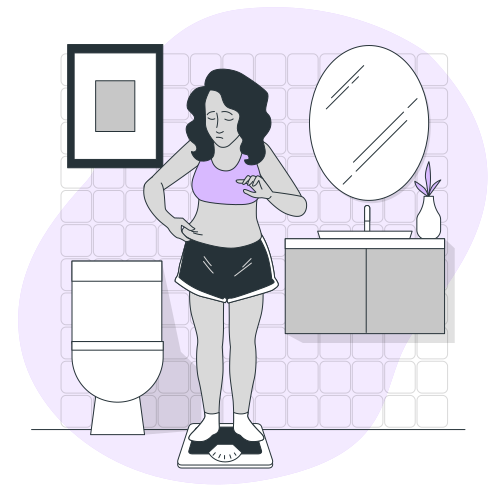
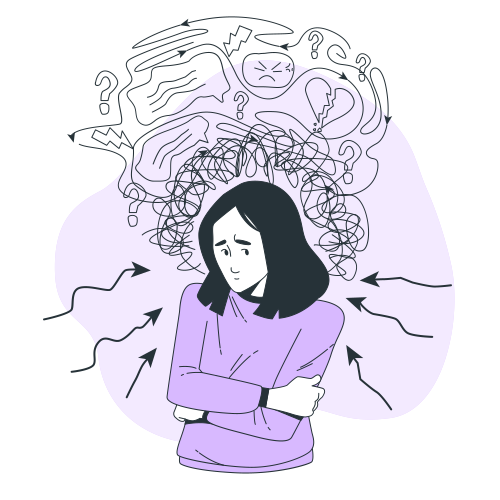
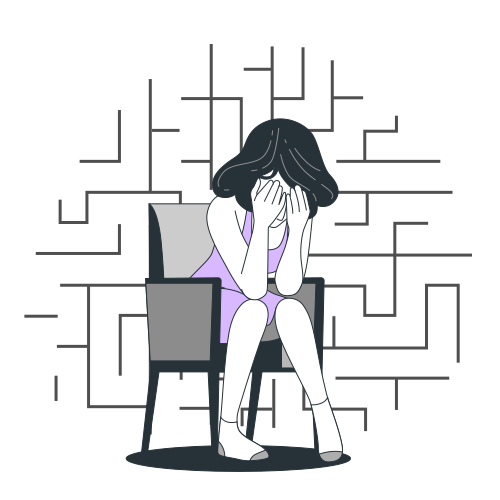
People with low self-esteem are often described as lacking confidence. In reality, many appear confident to everyone around them. They perform well at work. They support other people. They appear capable, reliable and successful. The struggle is usually much quieter than that. It lives in the constant self-doubt after conversations. The inability to accept compliments without immediately dismissing them.
The feeling that one mistake somehow outweighs everything you’ve done well. The voice that sets impossibly high standards, then criticises you for not reaching them. After living with it for long enough, many people stop questioning that voice altogether. They assume it is simply an accurate reflection of who they are. It isn’t.
Understanding it
Low self-esteem is more than a lack of confidence
People often describe low self-esteem as having low confidence. Confidence is only part of the picture. At its core, low self-esteem is often about the way we evaluate ourselves. When something goes well, we explain it away.
I just got lucky.
Anyone could have done that.
They were only being polite.
When something goes wrong, however, the conclusion feels immediate.
This proves I’m not good enough.
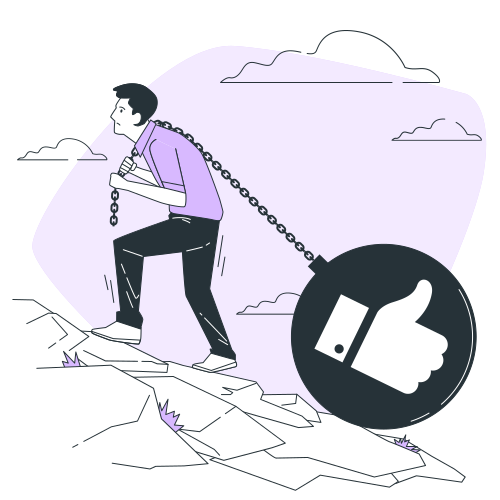
Over time, the mind becomes remarkably efficient at collecting evidence that supports its negative view while quietly dismissing anything that contradicts it. The result isn’t simply feeling less confident. It’s living with the exhausting sense that you have to earn your worth over and over again, yet never quite succeeding.
What keeps it going
The cycle that keeps low self-esteem going
Many people assume that becoming more confident means changing the way they think. Usually, confidence develops in the opposite direction. Low self-esteem often encourages people to stay quiet, avoid opportunities, seek reassurance, over-prepare or constantly compare themselves with others. These strategies usually feel protective. If you never put yourself forward, nobody can reject you.
If everything is perfect, nobody can criticise you. If someone reassures you, perhaps you’re doing okay after all. The difficulty is that these strategies rarely strengthen self-belief. Instead, they quietly reinforce the idea that you need them in order to cope. Therapy helps break this cycle by gently testing the assumptions that have shaped the way you see yourself for years.
The goal isn’t to convince you that you’re amazing.
It’s to help you build a view of yourself that is fair, balanced and no longer defined by your harshest moments.
What I help with
Difficulties commonly linked with low self-esteem
Low self-esteem affects every person differently and often overlaps with other emotional difficulties.
I commonly support people experiencing:
- Persistent self-criticism
- Fear of failure
- Perfectionism
- Imposter syndrome
- People-pleasing
- Fear of disappointing others
- Constant comparison with others
- Difficulty setting boundaries
- Fear of rejection
My approach
I use Cognitive Behavioural Therapy (CBT), one of the most extensively researched psychological therapies for difficulties linked to low self-esteem. Therapy is collaborative, practical and tailored to your individual experiences. Rather than focusing on surface-level confidence, we work together to understand the deeper beliefs that influence how you see yourself, your relationships and your future.
The aim isn’t to become a different person. It’s to relate to yourself with the same fairness and balance that you already extend to other people.
How therapy helps
How therapy can help
One of the biggest misconceptions about therapy is that it teaches people to think positively about themselves. That isn’t my aim. If someone has spent years believing they aren’t good enough, asking them to suddenly replace those thoughts with positive ones rarely feels believable. Instead, therapy helps us understand how those beliefs developed, why they have remained so convincing and how they continue to influence your everyday life.
Together we explore the rules you’ve been living by, the standards you’ve been holding yourself to and the habits that quietly reinforce self-doubt. As these patterns become clearer, people often notice something unexpected. They don’t necessarily become more confident overnight. They simply stop believing everything their inner critic tells them. That creates space for confidence to develop naturally through experience rather than through constant self-reassurance.
Online sessions
Online therapy for low self-esteem across the UK
Although I am based in Manchester, I provide online therapy for adults throughout the UK. Online sessions allow you to access therapy in a familiar environment, making it easier to fit support around work, family life and other commitments while receiving the same structured and collaborative approach.
Before we begin
Your questions,
answered.
You don’t need to have everything figured out before getting in touch.
Can therapy help if I’ve always lacked confidence?
Yes. Many people describe low self-esteem as simply being part of their personality because they’ve lived with it for so long. Therapy often reveals that what feels like personality is actually a collection of beliefs, assumptions and coping strategies that developed for understandable reasons and have become deeply established over time. Understanding those patterns allows them to become more flexible, making space for a different way of relating to yourself.
Do I need to know where my low self-esteem comes from?
Not necessarily. Sometimes people can clearly identify experiences that influenced the way they see themselves. Other times there isn’t one defining event. Understanding your history can be helpful, but therapy isn’t about searching endlessly for a single cause. While we acknowledge how past experiences may have shaped your self-beliefs, our main focus is understanding what continues to maintain them today and what can be changed in the present.
Will therapy make me more confident?
Confidence is often the outcome rather than the starting point. As people begin challenging long-standing self-beliefs, taking small risks and responding to themselves with greater fairness, confidence often develops naturally. Rather than trying to feel confident first, therapy helps create the experiences from which confidence grows.
How many therapy sessions will I need?
That is entirely up to you. Therapy isn’t something you commit to for a fixed period, and you are always in control of how long you choose to continue. Some people come to therapy to work through one specific difficulty or life event, while others prefer to take more time to explore longer-standing patterns and make gradual changes.
During our first sessions, we’ll discuss your goals and regularly review how therapy is progressing, so you can decide what feels most helpful for you.
Take the first step
A little space
for something to change.
Many people spend years trying to become the person they believe they should be before allowing themselves to feel good enough. Ironically, that pursuit often strengthens the very beliefs that keep them stuck. Therapy offers an opportunity to step out of that cycle. Not by pretending your strengths outweigh your weaknesses, but by developing a way of seeing yourself that is no longer filtered through constant self-criticism.
Book a free consultation to talk about what’s happening and whether working together feels right for you.
Based in Manchester · Online across the UK
Therapy in English & Italian
There can be more to the picture