Online Stress & burnout therapyWhen coping starts to feel like surviving
Online therapy with Lisa Marini for adults across the UK. Understand the patterns behind exhaustion and find more sustainable ways of responding to life’s demands.
Sessions in English & Italian
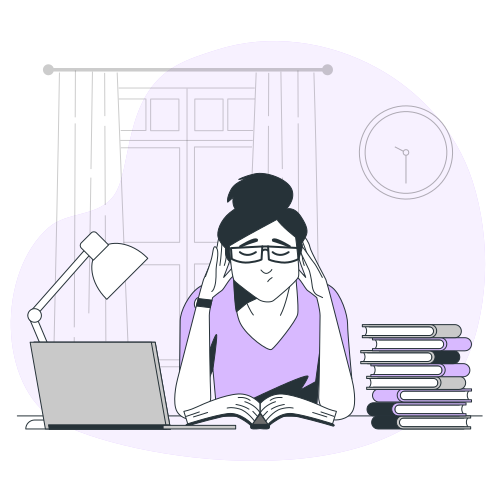
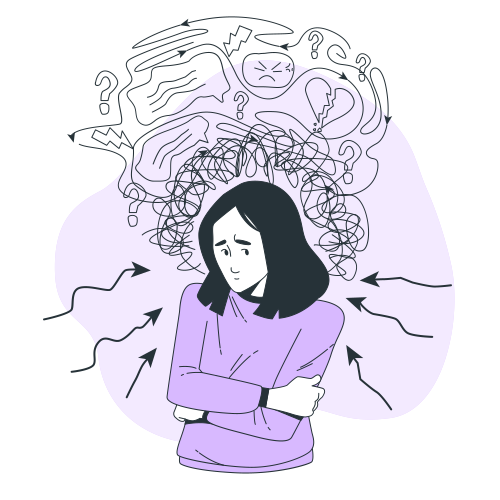
Stress isn’t always obvious. It doesn’t necessarily begin with a breakdown, panic attack or dramatic crisis. More often, it develops quietly. You keep meeting deadlines, looking after your family, caring for others, paying the bills and doing everything that needs to be done. From the outside, it may even look as though you’re coping remarkably well.
Inside, however, life starts to feel as though you’re constantly running on empty. The things that once felt manageable now require enormous effort. Small setbacks feel disproportionately overwhelming. You become increasingly irritable, emotionally drained or detached, yet slowing down doesn’t seem like an option because too many people rely on you. Stress often convinces us that we simply need to keep pushing a little longer.
Burnout is what can happen when "a little longer" quietly becomes months or even years.
Understanding it
Stress isn’t always the problem
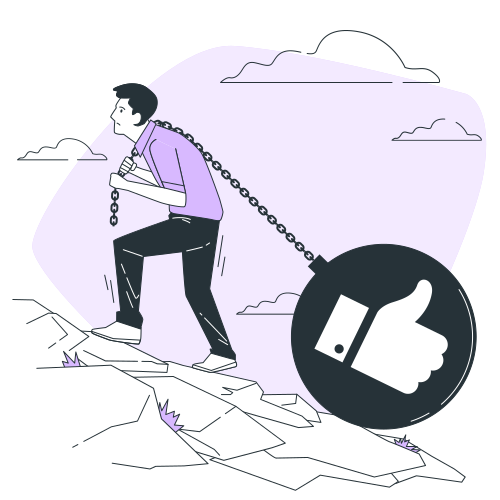
People often come to therapy saying they need help managing stress. Sometimes that’s true. But just as often, stress itself isn’t the problem. The real difficulty is carrying responsibilities that have gradually become too heavy, for too long, without enough opportunity to recover. Perhaps you’ve spent years putting everyone else’s needs before your own.
Perhaps work has slowly expanded into evenings and weekends until being busy simply became normal. Perhaps you’re caring for children, ageing parents or a loved one while trying to hold together every other part of your life. Or perhaps financial pressures, health concerns or unexpected life events have left you feeling as though there is never a chance to catch your breath.
Stress doesn’t only come from one major event. More often, it develops through the steady accumulation of demands that gradually leave very little space for rest, enjoyment or yourself.
What keeps it going
The cycle that keeps stress and burnout going
One of the reasons stress becomes so persistent is that the strategies people use to cope are often the very ones that increase exhaustion over time. You work longer hours to stay on top of things. You stop taking breaks because there’s too much to do. You cancel plans because you’re too tired.
You tell yourself you’ll rest once everything is finished. The problem is that everything is rarely finished. Life simply presents the next demand. Gradually, recovery becomes something you plan for rather than something you actually experience. Many people only realise how depleted they’ve become when they notice they no longer enjoy the things that once helped them switch off, or when even small demands begin to feel overwhelming.
Therapy helps interrupt this cycle by exploring not only how you respond to stress, but also the expectations, beliefs and circumstances that may have made chronic stress feel inevitable.
Sometimes the most meaningful change isn’t learning to tolerate more pressure.
It’s recognising that you’ve been carrying far more than anyone could reasonably be expected to.
How therapy helps
How therapy can help
Many people assume that therapy for stress is about relaxation techniques or learning to stay calm. While these strategies can sometimes be useful, lasting change usually comes from understanding the patterns that have gradually made stress feel unmanageable. Together we explore the demands you’re facing, the expectations you place on yourself and the ways you’ve adapted in order to keep everything going.
For some people, this involves learning to set healthier boundaries. For others, it means reducing perfectionism, asking for support, making difficult decisions or reconnecting with parts of life that have quietly disappeared beneath responsibilities. The goal isn’t to eliminate stress entirely. Stress is part of life. The aim is to help you respond to it in ways that are sustainable, allowing you to continue caring about the things that matter without sacrificing your own wellbeing in the process.
What I help with
The types of stress I commonly work with
Stress looks different for everyone and therapy is always tailored to your individual circumstances.
I commonly support people experiencing:
- Workplace stress and burnout
- Carer’s burnout
- Family pressures
- Stress linked to major life transitions
- Long-term caring responsibilities
- Feeling constantly overwhelmed
- Difficulty switching off
- Emotional exhaustion
My approach
I use Cognitive Behavioural Therapy (CBT), one of the most extensively researched psychological therapies for a wide range of emotional difficulties, including stress and burnout. Therapy is collaborative, practical and tailored to your individual circumstances. Rather than offering generic stress-management advice, we work together to understand the specific patterns that are keeping you stuck and identify realistic changes that fit your life.
The focus is not on helping you cope with an unsustainable lifestyle forever. It is on helping you build one that is more manageable in the long term.
Online sessions
Online stress and burnout therapy across the UK
Although I am based in Manchester, I provide online therapy for adults throughout the UK. Online sessions make it easier to access support around work, parenting and other responsibilities without adding extra travel time to an already busy schedule. Many people find that attending therapy from home allows support to fit more naturally into everyday life.
Before we begin
Your questions,
answered.
You don’t need to have everything figured out before getting in touch.
Is stress a good enough reason to come to therapy?
Absolutely. You don’t have to wait until stress becomes anxiety, depression or complete burnout before seeking support. Many people come to therapy because they recognise that life has become increasingly difficult to manage and want to understand how to make meaningful changes before reaching breaking point.
Will therapy solve the stressful situations in my life?
Therapy can’t remove every external pressure. What it can do is help you understand which aspects of your situation can be changed, how you respond to ongoing demands and what may be preventing you from protecting your own wellbeing. Often, small but meaningful changes in the way we think, behave and prioritise ourselves can have a significant impact, even when life’s demands remain challenging.
Is burnout the same as stress?
Not exactly. Stress often involves feeling overwhelmed by ongoing demands, whereas burnout is usually associated with prolonged stress that has led to emotional exhaustion, reduced motivation and a sense of becoming detached from work or other important areas of life. Understanding where you are on that continuum can help guide the most appropriate therapeutic approach.
How many therapy sessions will I need?
That is entirely up to you. Therapy isn’t something you commit to for a fixed period, and you are always in control of how long you choose to continue. Some people come to therapy to work through one specific difficulty or life event, while others prefer to take more time to explore longer-standing patterns and make gradual changes.
During our first sessions, we’ll discuss your goals and regularly review how therapy is progressing, so you can decide what feels most helpful for you.
Take the first step
A little space
for something to change.
Many people spend years telling themselves that things will settle down after the next deadline, the next school holiday, the next financial hurdle or the next major life event. Sometimes they do. Often, another demand simply takes its place. Therapy provides an opportunity to pause, understand what has been keeping you under constant pressure and begin building a life that feels more sustainable.
Book a free consultation to talk about what’s happening and whether working together feels right for you.
Based in Manchester · Online across the UK
Therapy in English & Italian
There can be more to the picture