


01
Assessment
Exploring your story.
The first 1-2 sessions will focus on exploring your current difficulties and on defining your therapy goals.

Online CBT Therapy
When life feels overwhelming, you don't have to face it on your own.
Therapy That Meets You Where You Are

Sessions are held online via secure video call, creating a flexible and confidential space to understand what is happening and build tools for lasting change.
Therapy Areas
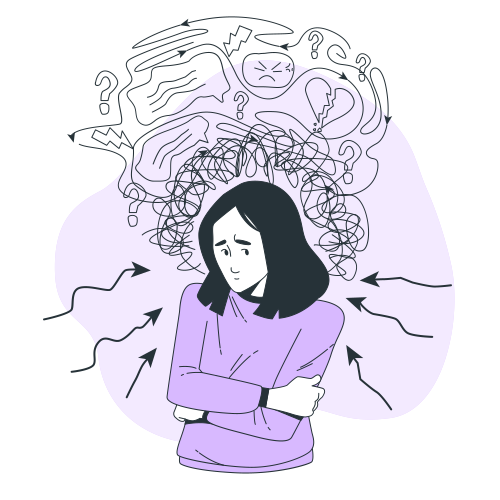
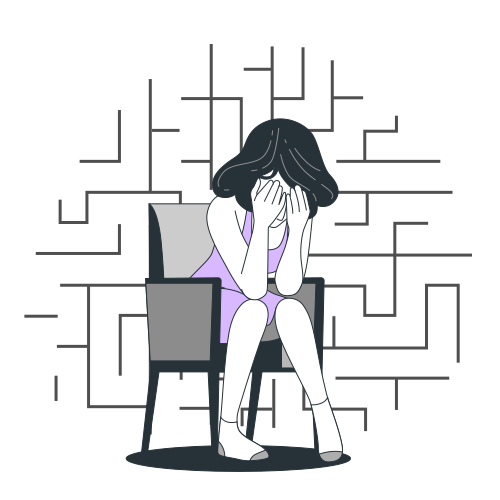
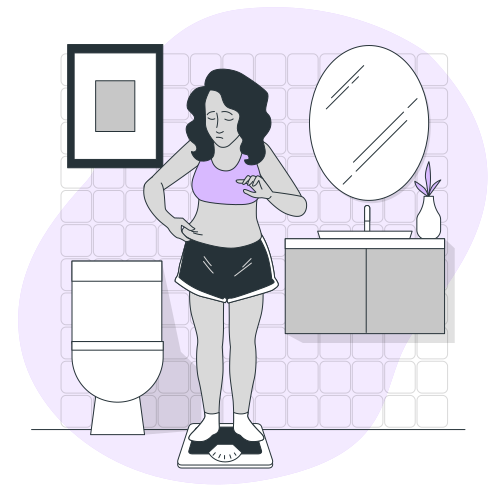
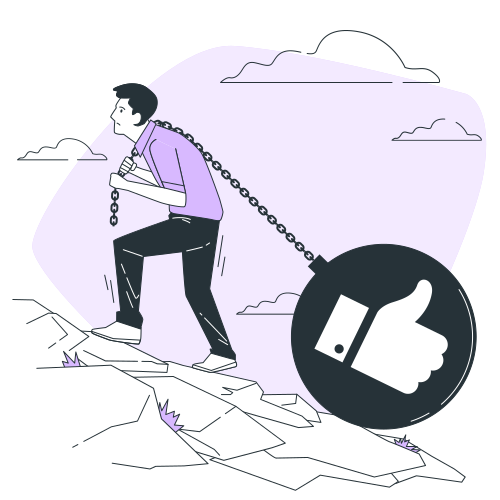
Here's a range of common mental health difficulties I support people with.
If you're unsure whether your concern is listed, please don't hesitate to get in touch. I'm happy to discuss your situation.
Becomethe bestversion ofyourself
What To Expect
A session is a 50-minute, one-to-one confidential conversation held via video call. You will experience a supportive and non-judgmental approach, and we will work collaboratively in a practical, goal-oriented way, structured into three main phases.
01
Exploring your story.
The first 1-2 sessions will focus on exploring your current difficulties and on defining your therapy goals.
02
Understand the underlying patterns.
In this stage, we will work collaboratively to make sense of your difficulties, understand what keeps them going, and identify the vicious cycles you may be stuck in.
03
Apply tools and create change.
This is the most practical phase. You will develop coping strategies that you can apply in your daily life to support meaningful change.
Who I Am
I’m Lisa Marini, a BABCP-accredited CBT therapist supporting adults with anxiety, depression and related difficulties through one-to-one online therapy.

I hold a BSc in Psychology and an MSc in Neuroscience and Neuropsychological Rehabilitation. I began my career supporting individuals with neurological conditions before becoming a fully accredited CBT therapist (MBABCP- Member of the British Association for Behavioural and Cognitive Psychotherapies), specialising in common mental health difficulties.
With over 10 years of experience in private and public mental health services, I support adults with anxiety, depression, and other difficulties through evidence-based one-to-one online therapy.
While CBT is my main approach, I also draw on ACT (Acceptance & Commitment Therapy), CFT (Compassion-Focused Therapy), and mindfulness-based approaches to tailor treatment to each person’s needs. I offer therapy in English and Italian.
Use of standardised outcome measures
I use validated questionnaires to support the assessment and formulation process and to inform our treatment. These scores also help us track your progress over time.
Neurodiversity-informed therapy
My work is adapted to neurodivergent needs (ADHD/ASD spectrum), considering differences in communication, attention, and information processing.
Culturally-sensitive therapy
My work is informed by your cultural background, values, and lived experience, recognising how these shape your identity, relationships, and mental health.
Registered Psychotherapist, BSc, MSc, PGDip, MBABCP
Questions
Here you can find answers to common questions about CBT, therapy sessions, and what to expect.
CBT is a structured, time-limited therapeutic approach that focuses on the relationship between thoughts, feelings, and behaviors. CBT works by helping you become aware of negative or distorted thinking patterns that may be contributing to emotional distress or unhelpful behaviors. CBT is a collaborative process, where you and your therapist work together to achieve your goals.
A 15-minute phone consultation is an informal opportunity to introduce each other, ask questions and get some insight into your difficulties. This will only be a brief conversation that will not replace a formal therapy assessment.
Therapy is for anyone who might be facing a difficult time. It can be beneficial for anyone looking to improve their mental well-being, manage stress, build better habits, and improve self-esteem.
CBT is highly effective for a variety of conditions, including but not limited to anxiety disorders (e.g., Generalized Anxiety Disorder, Social Anxiety, OCD), depression and trauma. If you're looking for practical tools to manage your thoughts, feelings, and behaviors, CBT is likely a good fit. It's especially effective for those who are motivated to work on changing their thought patterns and behaviors. I also draw on other therapeutic modalities such as ACT and CFT to make our approach flexible and tailored to your needs. Please consult my ‘Therapy areas' section to see which conditions I help people with.
There is no fixed number; it is up to you. Typically, the length of CBT varies depending on the individual and the issue being addressed.CBT is a short-term therapy, lasting anywhere from 6 to 20 sessions.
One key aspect of CBT is that it often includes tasks or exercises between sessions. These help you practice new skills and apply what you've learned in everyday life. This “homework” is an essential part of CBT, as it accelerates progress and supports lasting, meaningful change.
You decide what to share, there's no pressure. My therapy mainly focuses on how your current thoughts and behaviours affect your wellbeing (‘the here-and-now'). However, exploring past experiences can sometimes help understand your core beliefs and how they influence the patterns you're experiencing today, especially if you suffered psychological trauma.
It's possible that you may feel upset during some sessions, and that's completely normal. Starting therapy often means talking about thoughts, emotions, or experiences that you've been carrying for a long time. Feeling emotional is not a sign of weakness, nor is it an indication that therapy isn't right for you. In fact, these moments often signal that you're touching on areas where real growth can happen. Sometimes things feel a bit harder before they begin to feel easier. You will always have support during this process, and your therapist will help you move at a pace that feels safe and manageable.
No specific preparation is needed. Just make sure your device is ready for video calls, with a working webcam and microphone, and that you are in a private, confidential space free from distractions (being outdoors is not recommended). It can be helpful to take a little time before your session to reflect on the issues you'd like to address, your goals for therapy, and any questions you may have. As part of best clinical practice, I will also ask for your GP's details and a next of kin (NOK) or emergency contact. Sharing this information is not compulsory, however, it can be important in rare situations where serious clinical risks arise and additional support is needed to keep you safe. We will always discuss this sensitively, and your information will be stored securely and used only when necessary.
Yes! CBT can be effectively conducted online, and research shows that it can be as effective as in person therapy. Online therapy is especially convenient for those with busy schedules or who prefer the flexibility of remote sessions, without the need to worry about travel, traffic, or parking. Just make sure you have a private, comfortable space for your session.
If you ever feel like you might harm yourself, or that you are at risk from others, please do not wait and reach out for help immediately. Consider contacting one (or more) of the resources below, or seeking urgent help through your local emergency services, GP, or a trusted friend or family member. Please note, this service is not a crisis service and does not deal with emergencies.
If you need help urgently:
Still Unsure?
If you still have questions, send a message and I’ll get back to you before you decide on the next step.